
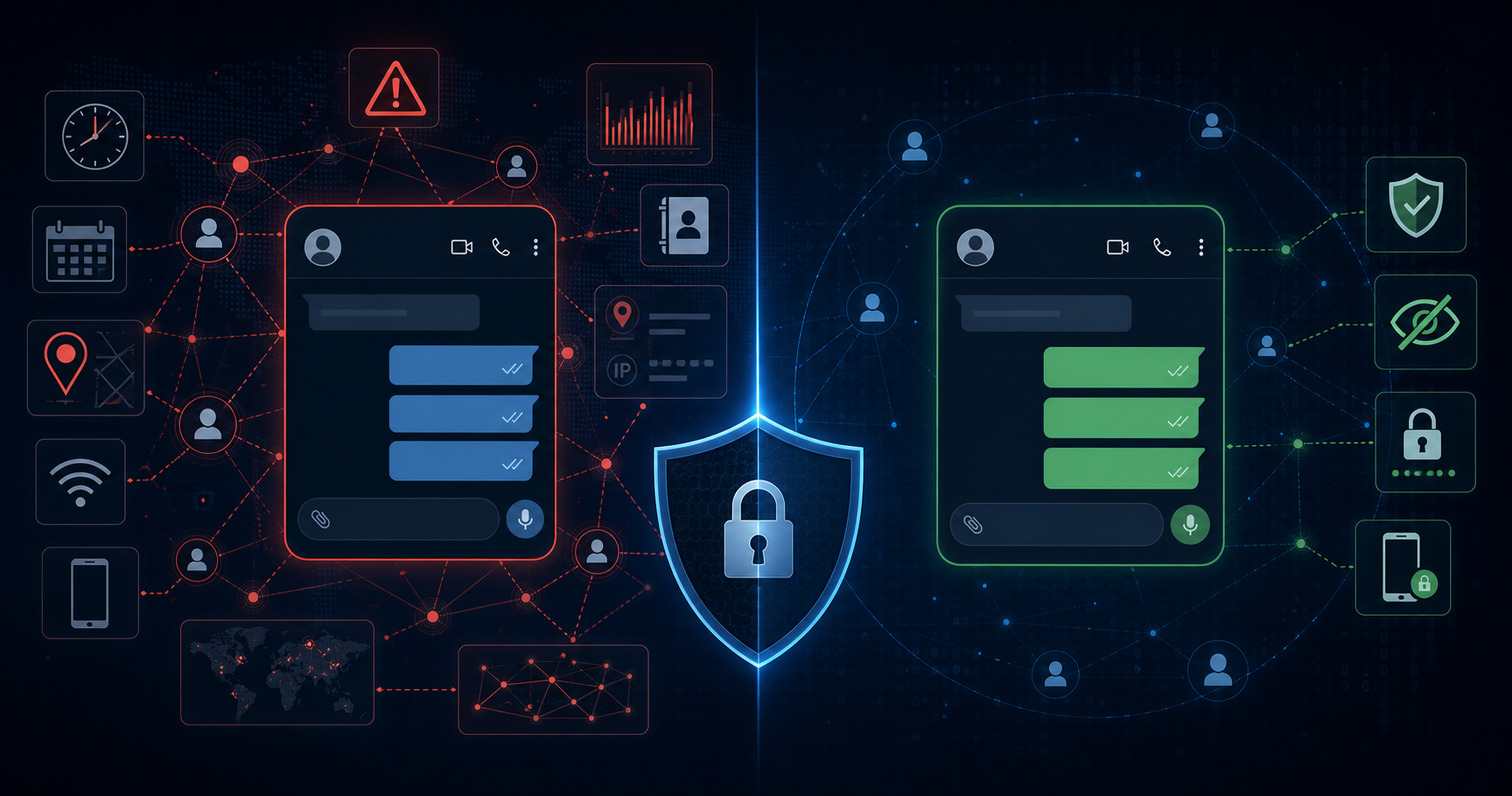
If you and the people you message use Apple devices, iMessage can be a more coherent choice than WhatsApp for everyday communication. This is not because WhatsApp lacks security — it also provides end-to-end encryption for personal messages and calls — but because iMessage combines encryption, system integration and more contained data handling inside an ecosystem designed by one company.
End-to-end encryption protects the content
Messages and attachments sent as iMessage are end-to-end encrypted. Apple says it cannot decrypt their content while it travels between devices. WhatsApp gives personal chat content comparable protection, so the meaningful difference is not encryption alone. The data surrounding a conversation, the way backups are stored and the services involved also matter.
Less dependence on Meta's advertising ecosystem
WhatsApp belongs to Meta, whose wider ecosystem includes services funded mainly through advertising and personalisation. Personal message content remains encrypted, but the app needs to process account, device, connection and usage information to operate and protect the service. iMessage is part of Apple's device and services business. That does not mean Apple collects no data, but it reduces the incentive to make messaging activity part of a cross-service advertising profile.
Integration without another app
iMessage is built into Messages and works across an iPhone, iPad, Mac, Apple Watch and Vision Pro linked to the account. Continuity between devices removes the need to install another platform, grant it more permissions and maintain another account. Users can also choose whether to start conversations from a phone number or an address linked to their Apple Account.
Verification for higher-risk conversations
iMessage Contact Key Verification helps confirm that you are messaging the intended person and warns about certain verification errors. Contacts can compare codes through an independent channel. It is aimed at sophisticated threats; it does not stop phishing, social engineering or a recipient taking a screenshot.
Backups still need attention
Encryption in transit does not by itself secure stored history. iMessages can be kept in iCloud. For stronger cloud-content protection, review the iCloud configuration and consider Advanced Data Protection where available. WhatsApp lets users enable end-to-end encrypted backups, but this is a setting that should be checked explicitly. With either service, a weak account password or an unlocked device can defeat many cryptographic protections.
The key warning: check the protocol
These protections apply only when a message is actually sent as iMessage, usually shown by a blue bubble. The Messages app can also send SMS, MMS and RCS. A conversation that changes protocol does not automatically retain iMessage's guarantees. Before sharing sensitive information, check the delivery method instead of relying only on the appearance of the app.
Which should you choose?
For a group made up entirely of Apple users, iMessage offers a private, integrated experience with fewer intermediaries. WhatsApp remains more practical when Android users are involved, when an organisation depends on its groups or when universal reach matters more than Apple integration.
The conclusion is not that WhatsApp is insecure. Rather, it is not always necessary to hand everyday communication to another platform. When everyone is already in the Apple ecosystem, iMessage is often the simpler and more reasonable option. Particularly sensitive conversations still require a clear threat model and may justify a service specifically designed to minimise data.